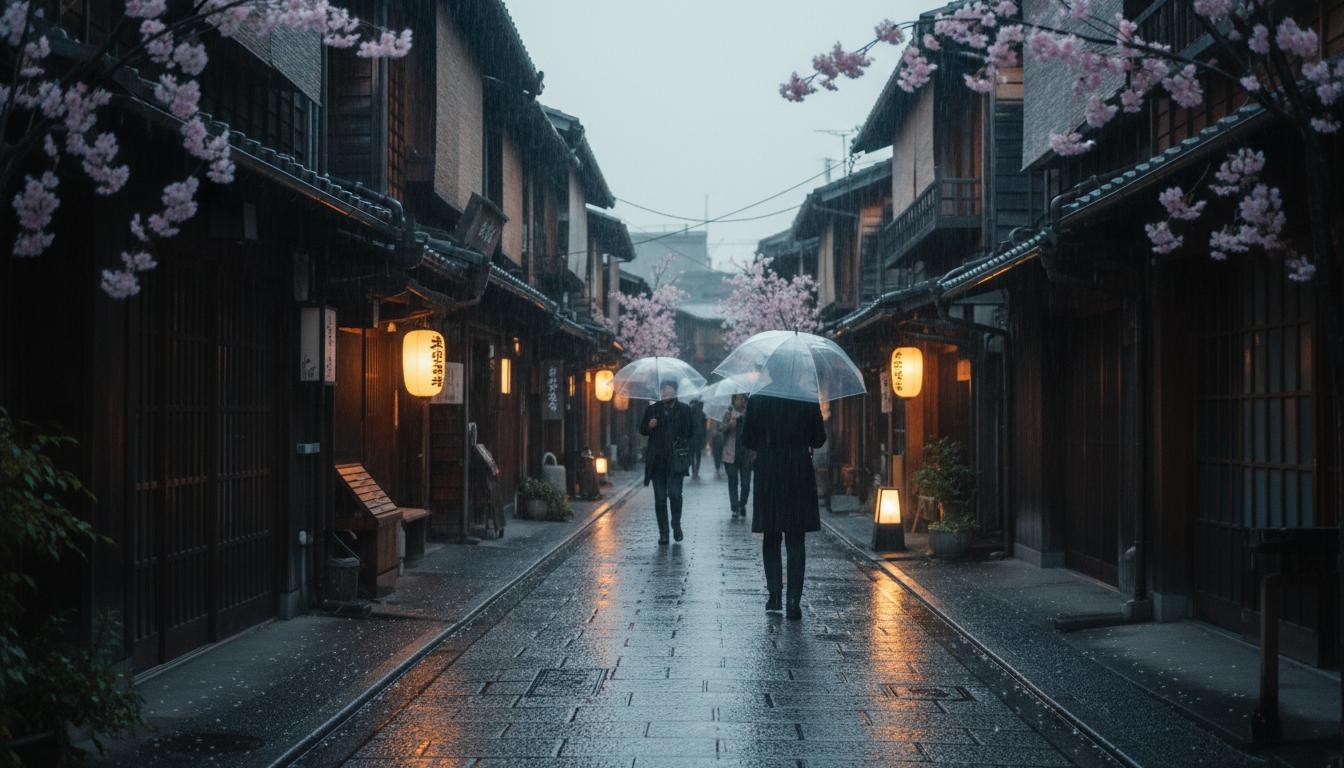
It Rains. A Lot. And That's Fine.
Here's the thing nobody tells you in the glossy travel brochures: Japan gets a lot of rain. We're talking up to 1,500 millimeters a year in some cities. That's not a light drizzle you can ignore with a hoodie. That's "my shoes are wet for three days straight" kind of rain. But here's the other thing: it's not a dealbreaker. Not even close.
We started Nippon Rain after David, our founder, spent a week in Osaka during typhoon season in 2019. He packed one of those tiny foldable umbrellas you get at the pharmacy back home. It lasted approximately 11 minutes in a crosswind before turning inside out and sailing into the Dotonbori Canal. He spent the rest of the trip buying clothes from Uniqlo and drying his only pair of sneakers under a hotel hairdryer. There had to be a better way.
Turns out, there is. Japan has been dealing with rain for centuries. They've got it figured out. From the perfectly engineered clear umbrellas sold at every convenience store to the miles of covered shopping arcades in Osaka and Tokyo, this is a country that doesn't let a little water slow it down. You just need to know what you're walking into. Literally.
This site is the guide we wish we'd had. No fluff, no "immerse yourself in the mystical rain" nonsense. Just practical advice on when it rains where, how much to expect, what to throw in your suitcase, and how to not be miserable when the skies open up. Because they will. And you'll be ready.
Start Here
Three topics we cover in exhausting detail so you don't have to learn the hard way like we did.
When It Rains Most
Japan's rain isn't random. June is tsuyu season — a month-long wall of wet that hits most of the country. August and September bring typhoons. October? Basically perfect. We break down every month so you can plan around the worst of it.
Month-by-Month GuideWhat to Pack
Leave the heavy rain boots at home. Seriously, they'll eat half your suitcase. We'll tell you what actually works in Japanese humidity — quick-dry fabrics, the right umbrella size, and where to buy gear for cheap when you land.
Packing ListWhere It Pours Heaviest
Tokyo and Osaka are wet, sure. But Fukuoka gets nearly 1,700mm a year. Sapporo? Surprisingly dry. We compare six major cities with real average rainfall data so you know exactly what you're in for.
City Rainfall DataA Few Hard Truths About Rain in Japan
Let's get the bad news out of the way first. Japan's rainy season — called tsuyu or baiu — typically runs from early June through mid-July in most regions. During this time, you'll get day after day of steady, unrelenting rain. Not dramatic thunderstorm rain. Just... constant gray skies and moisture that seems to come from every direction at once. Humidity hits 80-90% and stays there. Your hair will frizz. Your clothes will feel slightly damp even inside. It's not great.
Then there's typhoon season, which overlaps with the tail end of tsuyu and extends through September. Typhoons aren't romantic. They're loud, wet, and will cancel your train. They blow garbage around, flood underpasses, and turn a pleasant afternoon into a shelter-in-place situation. We don't recommend planning your trip during peak typhoon season unless you enjoy adrenaline and delayed Shinkansen departures.
But here's the good news: Japanese infrastructure is built for this. Streets drain remarkably well. Convenience stores stock cheap umbrellas the moment clouds gather. Train stations have waterproof bag covers. Shopping arcades stretch for kilometers in the cities, letting you walk for blocks without an umbrella. You're never far from shelter, and you're never far from a hot can of coffee from a vending machine to warm up.
And the best part? Rain clears out the crowds. That temple path that's packed with tour buses on a sunny October afternoon? Yours alone in a light June drizzle. The famous Shibuya crossing? Half as many people when it's pouring. There's something deeply peaceful about Kyoto's bamboo groves in misty rain. Just bring the right gear and it's honestly kind of magical.
Quick Answers to Common Questions
Should I avoid Japan during rainy season?
Not necessarily. Tsuyu is predictable — it starts early June and wraps up mid-July. If you don't mind carrying an umbrella and planning indoor backup activities, you'll find fewer tourists and lower hotel prices. Just don't expect to do much hiking or outdoor sightseeing without getting wet.
Can I buy rain gear after I arrive?
Absolutely, and you should. Convenience stores sell clear umbrellas for about 500 yen. Uniqlo's Blocktech rainwear line is affordable and actually works. Workman stores have heavy-duty options for under 2,000 yen. Don Quijote has everything if you're in a pinch at 2am. Check our packing guide for the full breakdown.
Which city has the worst rain?
Fukuoka on the island of Kyushu averages around 1,672mm of rain per year, making it the wettest major city on our list. July is brutal there with nearly 300mm. Compare that to Sapporo at 1,106mm annually and you see why city choice matters. See all six cities in our city rainfall guide.
Will trains run in heavy rain?
Usually yes, but typhoons are the exception. Japan's train systems are incredibly resilient to normal rain. A typhoon is a different story — JR East and other operators will suspend service when wind speeds hit certain thresholds. Always check JR East's website during storm warnings. Have a backup plan and extra cash for taxis if you're on a tight schedule.
Japan's Rain Culture — What Nobody Talks About
There's a whole cultural dimension to rain in Japan that most travel guides skip over. Rain isn't just weather here — it's woven into the culture in ways that are genuinely fascinating once you start noticing them.
Take the clear umbrella phenomenon. In most countries, clear umbrellas are a novelty. In Japan, they're the standard. You can buy them at every convenience store for about 500 yen, and you'll see hundreds of them on a rainy day in Tokyo. There's a practical reason — you can see where you're going in crowded areas — but there's also something almost poetic about a street full of transparent bubbles floating above the crowd. After a few days in Japan, you'll start feeling weirdly attached to your clear umbrella. David has brought three back to Seattle as souvenirs. They don't hold up well in wind, but they're beautiful while they last.
Then there's the covered shopping arcade culture. Osaka's Tenjinbashisuji stretches 2.6 kilometers — that's the longest shopping street in Japan — and it's entirely covered. You can walk from one end to the other in a downpour and never open an umbrella. Tokyo has similar arcades, though shorter. Kyoto's Nishiki Market is covered. Sendai's covered streets around the station are extensive. These aren't afterthoughts — they're intentional infrastructure built because the people who live here know it rains a lot and designed their cities accordingly.
The Japanese language has dozens of words for rain. There's kosame (light rain), shigure (cold late autumn rain), niwaka-ame (sudden rain), tsuyu (the rainy season itself), and oame (heavy rain), just to name a few. This linguistic richness reflects how deeply rain is integrated into daily life. When a culture has a specific word for "the kind of rain that falls while the sun is still shining" (tenkiame), you know rain is more than an inconvenience.
You'll also notice that rain doesn't stop daily life. Kids walk to school in raincoats. Salarymen commute in suits with umbrellas. Delivery workers ride bicycles with one hand on the handlebars and one hand holding an umbrella — a skill that takes years to master and looks absolutely terrifying to Western observers. The country doesn't shut down for rain. It adapts.
Our favorite rain-related Japanese invention? The umbrella lock. Many shops and restaurants in Japan have umbrella stands at the entrance with simple locking mechanisms. You put your umbrella in, take a key, and your umbrella is secured while you shop or eat. No more worrying about someone accidentally grabbing your umbrella on the way out. It's such a small thing, but it says so much about how rain is just... normal here.
The Konbini Umbrella Economy
We need to talk about convenience store umbrellas for a moment because they're genuinely one of Japan's greatest travel hacks. Every Lawson, 7-Eleven, and FamilyMart sells clear umbrellas for about 500 yen — roughly $3.50. They're not high quality. The ribs are thin plastic, the handles are basic, and a strong wind will destroy them. But they cost less than a latte at Starbucks.
This creates a fascinating phenomenon: travelers and locals alike treat these umbrellas as essentially disposable. You buy one when it starts raining, use it for the day, and if it breaks or you don't want to carry it home, you just leave it in the next umbrella stand you see. There's an unwritten understanding in Japan that umbrellas left in public stands are up for grabs. It's not stealing — it's recycling. David has "adopted" at least a dozen abandoned umbrellas over his trips, and he's left at least as many behind for the next person.
This system means you never need to pack a full-size umbrella for Japan. Just bring a compact travel umbrella for emergencies, and if you encounter sustained rain, buy a konbini umbrella and embrace the disposable umbrella lifestyle. Your luggage will thank you, and you'll fit right in with the locals.
Why We Don't Recommend "Rainy Season Tourism"
A quick note on something that bothers us: the growing trend of travel influencers promoting "rainy season tourism" as some kind of mystical, romantic experience. You've probably seen the photos — misty bamboo groves, raindrops on temple roofs, moody neon reflections in Tokyo puddles. And yes, those photos are real and beautiful.
But here's what the photos don't show: your soaked socks, the humidity that frizzes your hair into a halo, the cancelled hiking plans, the museums you've already visited because it's your third rainy day in a row. Tsuyu is not romantic after the first day. It's just wet.
We're not saying you shouldn't visit Japan during rainy season. We're saying you should visit with realistic expectations and proper preparation. Bring the right gear. Have indoor backup plans. Don't schedule outdoor activities that can't handle rain. And don't expect every moment to look like an Instagram post, because most of them won't.
What You'll Find on This Site
We've organized everything into three main sections, plus detailed legal pages and information about who we are. The monthly rain guide breaks down what to expect every month of the year with actual rainfall numbers. The city guides compare six major destinations with honest assessments of what the rain is like on the ground. The packing guide covers everything from umbrellas to shoes to fabrics, with specific product recommendations and where to buy them in Japan.
We've also included quick answers to common questions throughout the site. Can you buy rain gear after arriving? Yes, and you should. Should you avoid tsuyu season? Not necessarily, but know what you're getting into. Will trains run in a typhoon? Usually not. We've answered these questions and dozens more based on our own wet experiences across multiple trips.
A Note on Our Tone
We write like we talk — casual, direct, occasionally sarcastic. You'll see contractions, sentence fragments, and the occasional swear word (censored, because our moms read this). We start sentences with "And" and "But" because that's how people actually communicate. If you're looking for formal travel writing, we're not it.
We also don't sugarcoat things. If a month is miserable for travel, we'll say so. If a piece of gear is overpriced garbage, we'll tell you. Our loyalty is to our readers, not to destinations or brands. We'd rather you have an accurate picture of what to expect than a rosy one that leaves you unprepared.
What Makes This Site Different
We know there are hundreds of Japan travel guides out there. So why did we create another one?
Most Japan travel content falls into two categories: glossy, sponsored content that paints everything as perfect, and dense forum threads where you have to read 400 posts to piece together useful information. We wanted something in the middle — honest, detailed, written by people who've actually been there and gotten wet.
We don't use phrases like "hidden gem" or "vibrant tapestry." We don't tell you to "immerse yourself" in anything. We tell you that June in Kyushu is basically a swimming pool and that your cotton t-shirts will never dry in Osaka humidity. We mention real store names with real prices. We give you actual millimeter rainfall ranges, not vague "wet season" warnings.
We also don't have advertisers or sponsors, which means no one is telling us what we can and can't say. If a product is terrible, we'll say so. If a month is genuinely unpleasant for travel, we'll tell you to avoid it. There's no incentive for us to make Japan sound better than it is — we want you to have realistic expectations and a good trip, not to book something based on rosy advice and end up miserable.
Every piece of advice on this site comes from direct experience. We've stood in the rain in all six cities we cover. We've tested the umbrellas, the rain jackets, the waterproof shoes. We've made the mistakes so you don't have to. And we keep updating the content because weather patterns shift, stores close, and new products come out. This isn't a set-it-and-forget-it travel guide. It's a living resource.
Ready to Plan Around the Rain?
We've done the research so you don't have to learn from soggy mistakes. Pick a topic and get the details.
See the Monthly Rain Guide Check the Packing List